Skip to content
All projects
Flagship Case Study

Synceria

Music-based dating app. Concept to live launch on iOS and Android

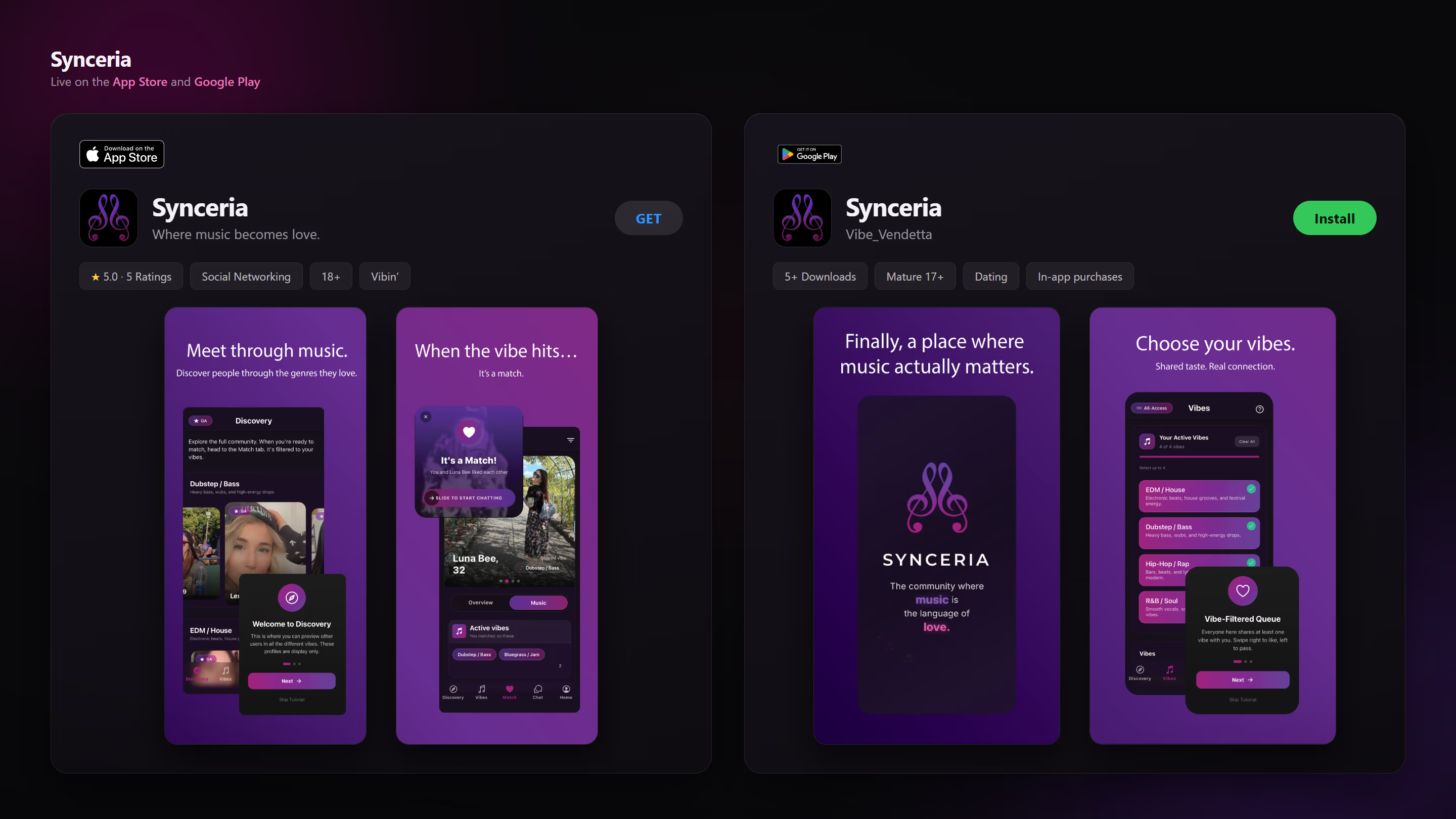
Synceria is the strongest proof asset in the portfolio. Over approximately one year I took a raw concept through 10-dimension market research, product strategy, UX design, React Native engineering, Supabase backend, red team security audit, and live launch on both the iOS App Store and Google Play, surviving two complete rebrands mid-development.

Role: Co-Founder & Product Lead
Team: Vibin' LLC (2-person)
Platforms: iOS & Android
Timeline: ~1 Year
iOS + Android
Both stores shipped
~1 Year
Concept to launch
9 Phases
Full lifecycle owned
2 Rebrands
Mid-development
React NativeExpoTypeScriptSupabasePostgreSQLSpotify APINativeWindZustandStream ChatRevenueCatEAS
01Opportunity

Dating apps optimized for attention. Not connection.

A category worth $12 billion, running on mechanics that produce swipe fatigue.

Mainstream dating apps are built around a core mechanic that serves engagement metrics more than real connection: the swipe. Photos, short bios, and basic prompts drive first impressions. The result is shallow engagement, swipe fatigue, and high churn in a product category where 79% of Gen Z report burnout, yet the space generates $12.37 billion annually and is projected to exceed $24 billion by 2032.

Music is a fundamentally different compatibility signal. Shared music taste is among the strongest predictors of social bonding, more durable than demographic similarity and more revealing than profile photos. Spotify's catalog provides a standardized, structured way for users to express their musical identity by selecting real artists rather than typing genres into a text field. The Spotify Web API makes this catalog searchable at scale, with Apple Music planned as a future integration.

The opportunity was to build a dating experience where curated musical identity replaces the photo-first swipe as the primary compatibility signal. Competitive analysis of nine apps (Tinder, Bumble, Hinge, Tastebuds, Vinylly, POM, Vipriya, Solmate, and Sitch) confirmed the gap: no major app built matching around structured Spotify catalog data as the primary signal.

The competitive moment sharpened in June 2025 when Tastebuds (the pioneer of music-based dating, with over 1 million all-time registrations and roughly 70,000 weekly active users) permanently shut down. An aging codebase, not a demand problem. A half-million users worldwide suddenly had nowhere to go, while the next competitor, Vinylly, had only ~2,000 members. Capturing even 10% of Tastebuds' weekly active users would yield ~7,000 highly-engaged early adopters, several times Vinylly's entire base.

$12.37B
Online dating revenue (2024)
Projected to exceed $24B by 2032
79%
Gen Z report dating-app burnout
Migrating away from generic swipe platforms
74%
Singles say music taste makes them more likely to match
Music compatibility as a primary driver
70K
Tastebuds weekly active users, suddenly orphaned
Shut down June 24, 2025. Not a demand problem.
Product thesis

Match around verified music taste rather than photos and bios. The result: higher-quality initial connections, more meaningful conversations, and better retention because users feel understood at a deeper level from the first interaction.

The unoccupied gap

No existing app builds matching around structured Spotify catalog data as the primary signal. Music-adjacent apps treat music as a secondary filter or rely on free-text genre preferences. None make curated music identity the core matching engine.

Documentation & Evidence
  • Competitive analysis: 9 apps studied in depth (Tinder, Bumble, Hinge, Tastebuds, Vinylly, POM, Vipriya, Solmate, Sitch) with founder backstories, team sizes, funding, and product strategies
  • Market sizing: $12.37B dating revenue (2024), $24B+ projected by 2032, with niche apps identified as key growth driver
  • TasteBuds Shutdown analysis: user migration potential, competitive gap analysis, category leadership strategy
  • 10-dimension market research with cited third-party statistics
02Research

Ten dimensions of evidence before a single line of code.

Desk research, competitive analysis, and a 50+ user branding survey.

Research combined two tracks: desk research and primary user research. Desk research built a 10-dimension audience analysis covering demographics, geography, psychographics, behavioral insights, needs and pain points, goals and motivations, channel and media habits, barriers and objections, competitive landscape, and market size and trends, all grounded in cited third-party statistics.

Competitive analysis went beyond surface comparison. For each of the 9 apps studied, the research covered founding stories, team structures, funding paths, and differentiation strategies. The goal was to understand not just what competitors built, but how they got started and where they were vulnerable.

Primary research included a 20-question survey distributed to 50+ users focused specifically on branding, logo design, and color preferences. This validated visual identity decisions before committing to final assets, confirming the color palette and 'Vibe-drop' logo direction with strong positive reception.

The most consequential finding: competitive research into how top dating apps got started (small teams, scrappy launches, and campus or city-density strategies) directly shaped the go-to-market approach. Soft launch 6–8 weeks before hard launch, city-first density strategy, and festival-season timing were all research-driven decisions.

9
Competitor apps studied in depth
10
Research dimensions in audience analysis
Demographics through market trends
50+
Users in the branding validation survey
Confirmed color palette and logo direction
8
UX research areas in the master framework
Navigation, swipe patterns, trust, accessibility, and more
Target audience

Gen Z and Millennial music enthusiasts aged 18–34. Digitally native, comfortable with dating apps, fatigued by superficiality. They curate playlists, attend concerts, follow artists actively, and see music taste as a meaningful compatibility signal.

The finding that shaped go-to-market

Competitive research into how top dating apps got started (small teams, scrappy launches, campus or city-density strategies) directly shaped the launch approach: soft launch 6–8 weeks before hard launch, city-first density strategy, and festival-season timing.

What the branding survey validated

50+ respondents confirmed strong positive reception for the original Vibin' gradient palette and the Vibe-drop logo direction, giving confidence to commit to the visual identity before development began. The palette later evolved through two rebrands into the shipped color system.

Documentation & Evidence
  • 10-dimension audience analysis (pages 5–34 of notebook): demographics, geography, psychographics, behavioral, needs/pain points, goals, channel habits, barriers, competitive landscape, market size
  • 9-app competitive breakdown with founding stories and differentiation strategies
  • UX research framework: master prompt covering 8 areas including navigation patterns, swipe mechanics, thumb-friendly heat maps, trust and safety, accessibility, gamification, onboarding, and retention
  • 50+ user branding survey: 20 questions on logo concepts, color palettes, and visual direction
03Strategy

Four pillars. One coherent product. One realistic path to ship.

MVP definition, tradeoffs, and a subscription model benchmarked against 8 competitors.

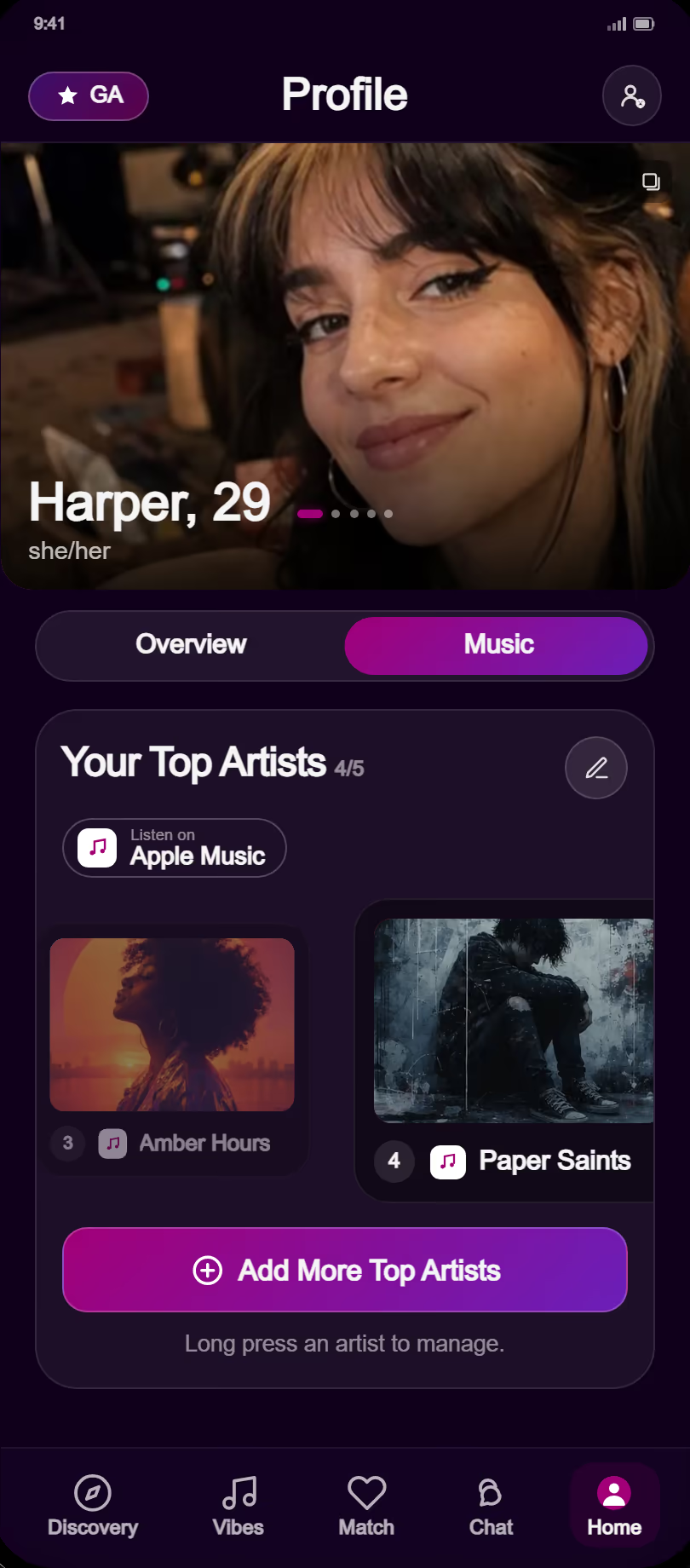
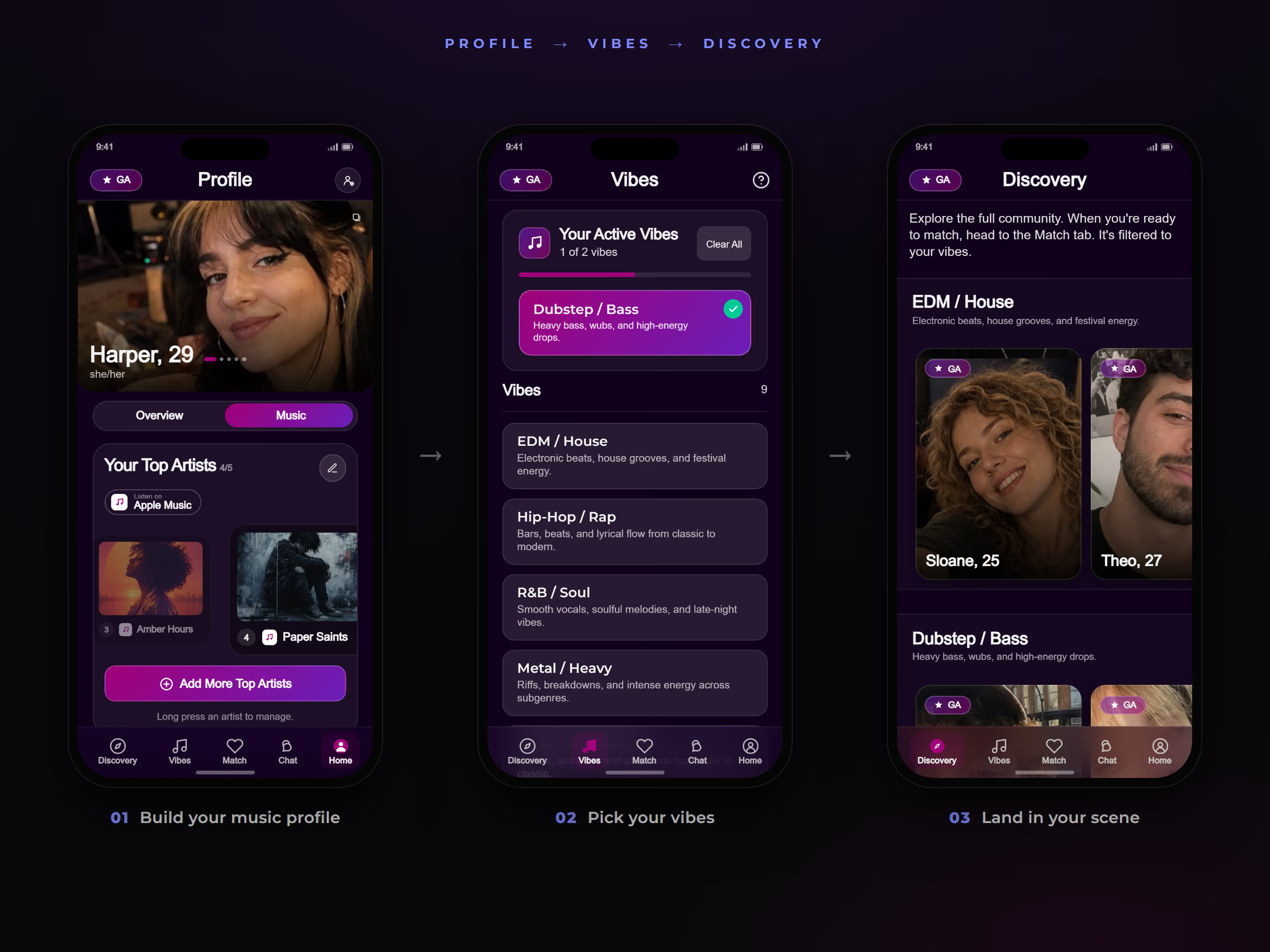
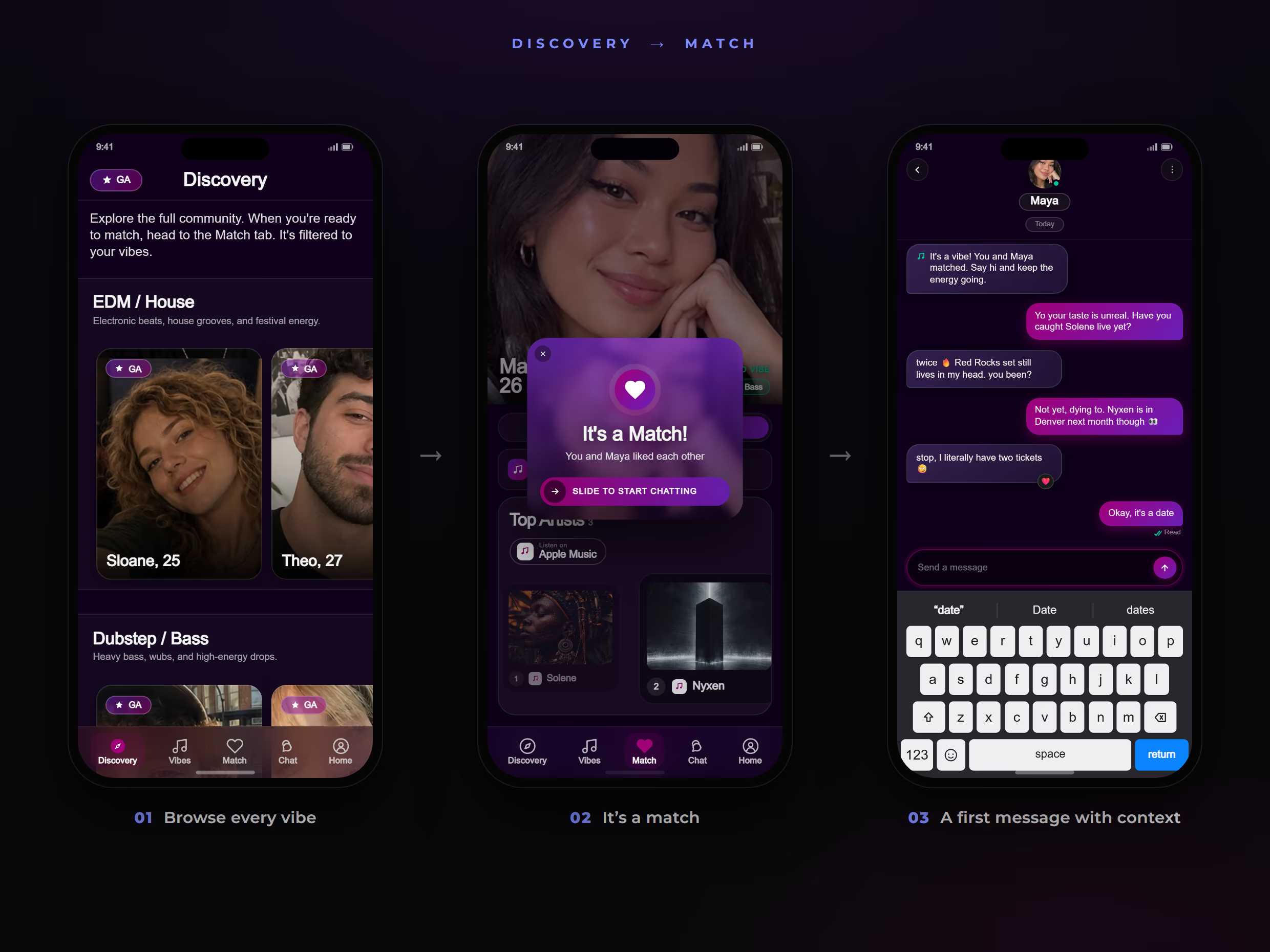
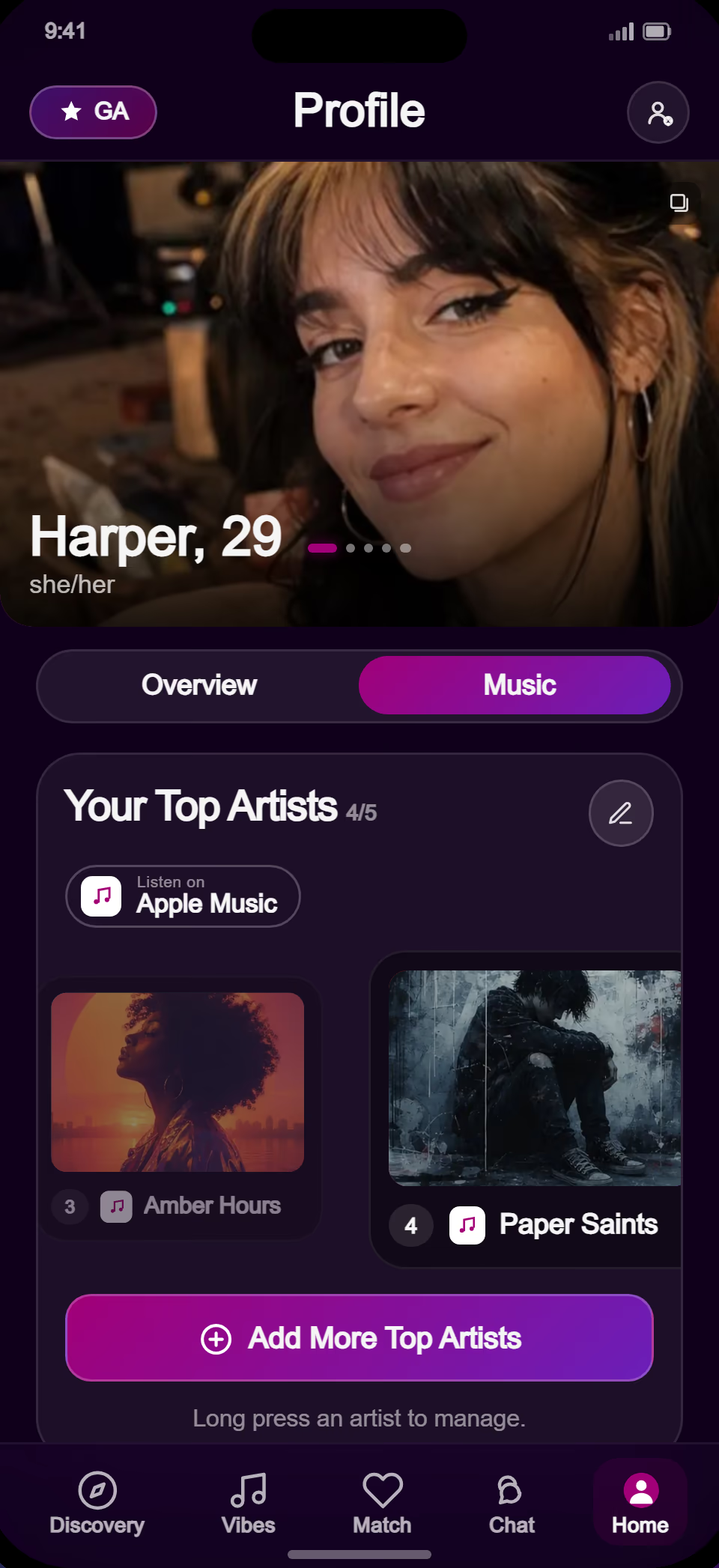
The MVP centered on four pillars: (1) Spotify Web API integration, where users search the catalog and select favorite artists to build their music profile, (2) genre-based vibe rooms that group users by shared musical taste (each selected genre, sub-genre, or artist creates a separate user pool), (3) a swipe and matching system with like tiers and daily caps by subscription level, and (4) real-time chat via Stream Chat for matched users.

What was intentionally deferred: AI-powered matchmaking (scoped but deprioritized in favor of shipping core matching), Apple Music as an alternative data source (planned for post-launch), identity verification via Veriff (evaluated and scoped, deferred to post-launch), ad-supported monetization (AdMob explored but pulled due to dependency conflicts with the existing package ecosystem; Meta Ads under consideration as the app matures), audio/video calling, group matching, advanced concert integration, and couples modes.

The biggest product tradeoff was scope discipline. Early planning included an AI matchmaking advisor, a Spotify account-linking OAuth flow, and ad-supported free tiers. Each was evaluated, and each was cut or simplified when the technical or compliance cost outweighed the V1 value. The decision to ship a focused product faster proved more valuable than shipping a feature-rich product later.

The subscription model was refined from an initial 4-tier plan to 3 tiers (GA free, VIP, AllAccess) during development, benchmarked against 8 competitor pricing models and positioned to undercut Tinder and Bumble's premium tiers while matching features. Choosing Supabase over Firebase was another defining decision: PostgreSQL's relational power was essential for complex match scoring queries, and Edge Functions kept infrastructure serverless.

4
Core MVP pillars
Spotify integration, vibe rooms, matching, and chat
3
Subscription tiers
GA (free) · VIP · AllAccess, refined from an initial 4-tier plan
8
Competitor pricing models benchmarked
Positioned to undercut Tinder and Bumble premium
Supabase over Firebase

PostgreSQL's relational model enabled complex match scoring queries that would have been difficult in Firestore's document model. Row-level security, Edge Functions, and a generous free tier made Supabase the right call.

Scope discipline over feature ambition

Early planning included AI matchmaking, Spotify OAuth account linking, identity verification, and ad-supported free tiers. Each was evaluated on its V1 value vs. technical and compliance cost. Cutting or deferring features that weren't load-bearing for launch shipped a focused product faster.

Constraints that sharpened the product

Two-person team, one builder. Spotify API rate limits required careful architecture. Budget pressure drove Supabase adoption. Expo compatibility filtered vendor choices. Veriff was evaluated for identity verification and scoped for post-launch integration.

Documentation & Evidence
  • Feature prioritization: MVP feature lists and deferred feature notes (notebook pages 3–4, 55–56)
  • Subscription tier research: competitor pricing comparison across 8 apps (notebook pages 51–52)
  • Product requirements document: core feature definitions with data model schemas
  • Development timeline: week-by-week Phase 1 plan (Scope → Wireframes → Design system → Data model → API design)
04UX Flows

Five flows built around trust, clarity, and momentum.

Every friction point examined. Every convention respected where it served the user.

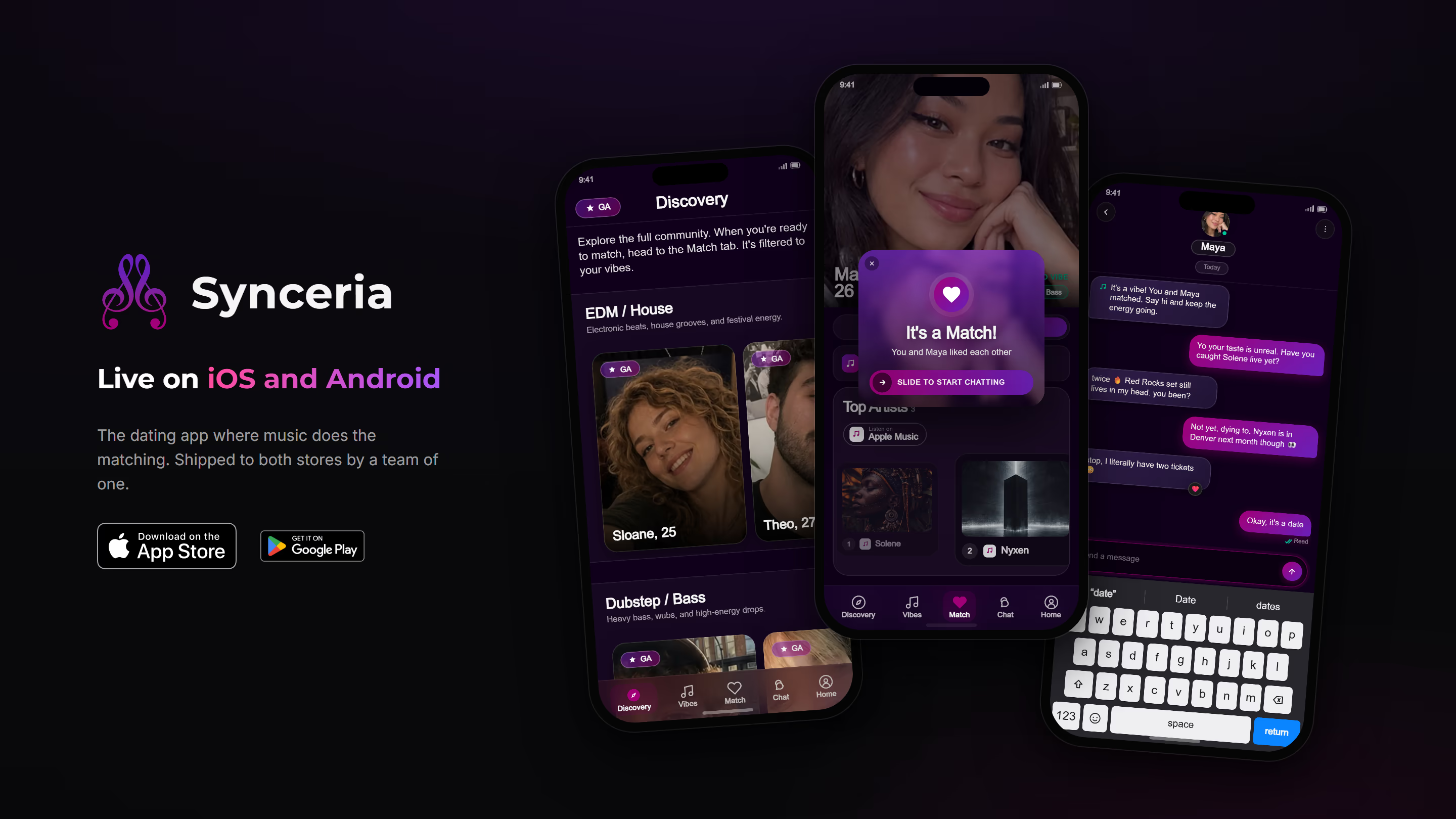
Five primary flows were designed: (1) Onboarding: account creation, Spotify artist search to build a music profile, genre and subgenre selection, photo upload, and first vibe room assignment. (2) Discovery: browsing genre-based vibe rooms, viewing profiles with music data, swiping with like/super like/pass. (3) Matching: mutual like confirmation and match notification. (4) Chat: real-time messaging via Stream Chat for matched users. (5) Profile management: editing bio, photos, music preferences, and subscription settings.

Onboarding was the highest-stakes flow to get right. The Spotify integration step, where users search the catalog and add favorite artists, is the first moment the app delivers meaningful value. The original plan used Spotify OAuth to link accounts and access listening history directly, but this was simplified to catalog search via the Spotify Web API. The tradeoff: less automated data, but faster development, full Spotify TOS compliance, and the same outcome. Users build a music identity that powers matching.

Friction was reduced wherever convention could be leveraged. The 5-tab bottom navigation (Discovery, Vibes, Match, Chat, Home) mirrors patterns from Tinder, Bumble, and Hinge so muscle memory transfers. Genre selection was designed to feel like identity expression rather than a settings form: choosing genres immediately assigns you to vibe rooms where everyone shares that taste, creating immediate value from the first selection.

Trust and clarity shaped every detail. Music data permission copy was written to explain exactly what is accessed and why. Genre selection was framed as identity expression: choosing genres immediately assigns you to vibe rooms where everyone shares that taste, creating immediate value from the first selection.

5
Primary user flows
Onboarding through profile management
5-tab
Bottom navigation
Discovery · Vibes · Match · Chat · Home
Web API
Spotify integration
Catalog search, pivoted from OAuth account linking for TOS compliance
The critical flow: Onboarding

The Spotify artist search step is where users build their music identity. If this feels clunky or unclear, the product fails at its foundation. The pivot from OAuth account linking to catalog search simplified the flow while preserving the core value proposition: users express who they are through music.

Genre selection as identity

Choosing genres wasn't treated as a filter settings form. Each genre selection puts you in a vibe room with everyone who shares that taste, creating immediate value and community feeling from the first tap.

Dynamic top bar

The top bar changes contextually based on the active tab, reducing deep navigation hierarchies. This was informed by competitor top bar pattern analysis across Tinder, Bumble, and Hinge.

Documentation & Evidence
  • Navigation design: 5-tab bottom nav specs with icon mappings, rationale table, and competitor pattern analysis (notebook pages 85–86, 96–98)
  • Top bar design: contextual top bar layout with competitor analysis (notebook pages 96–98)
  • UX best practices research: comprehensive dating app analysis covering navigation, swipe patterns, thumb-friendly heat maps, trust/safety, accessibility, gamification
05Design

A visual identity built to survive two complete rebrands.

Three brand phases. One consistent design language. 30+ logo concepts. A palette validated by 50+ users.

The interface was built around three principles: (1) music-first identity, where every screen reinforces that this is a music-powered experience, not a generic dating app with a music skin, (2) dark-mode native, where the charcoal background (#1A1A1A) creates an immersive, nightlife-adjacent atmosphere that makes vibrant accent colors pop, and (3) clarity over cleverness, where standard interaction patterns were favored over novel but confusing mechanics.

The visual identity had to survive two complete rebrands. The app launched internally as Vibin', was renamed to SSYNC mid-development, then renamed again to Synceria before shipping. Each rename required rethinking the visual identity, domain strategy, store listings, and marketing materials from scratch while continuing to build and ship the product.

During the Vibin' phase, the logo went through 30+ initial concepts, narrowed through an icon usability map of 35 concepts, refined to the 'Vibe-drop' direction (a teardrop combined with a waveform forming a V). The color palette went through 4 distinct explorations before landing on the Vibin' phase gradient: Vibin Pink (#FF4D9D), Neon Magenta (#FF2EAA), Electric Purple (#C728FF), and Vivid Violet (#8927FF). The 50+ user branding survey validated this palette and direction with strong positive reception. Through two subsequent rebrands, the production palette evolved to Pink (#A10078), Purple (#6A1FB9), and Teal (#00C896), a shift that preserved the bold, energetic character while maturing the identity.

The SSYNC rebrand produced a complete playbook: a stylized double-S wordmark (two S's mirrored like eighth notes), strict casing rules, new domain strategy, social handle reservations, and rebuilt ASO copy for both stores. When Synceria became the final name, all of this was rebuilt again. The core design language (the color palette, typography, and dark aesthetic) survived all three phases, proving the design foundation was strong enough to transcend any specific name.

Typography was finalized as a dual-typeface system. The original design used Recoleta for headings (warmth and personality with high-contrast letterforms), but this was later switched to Montserrat (geometric, modern, and clean) for a more polished, contemporary feel. Inter remained for body copy (neutral and legible). A complete typographic scale was defined, from H1 at 48px/Montserrat Bold through Caption at 14px/Inter Regular, with documented line-height, paragraph spacing, and tracking values. The design system also formalized a complete error state color system (light and dark variants, all WCAG AA compliant).

30+
Logo concepts evaluated
Narrowed through an icon usability map of 35 concepts
3
Brand phases
Vibin' → SSYNC → Synceria
4
Color palette explorations
Before landing on the final gradient system
WCAG AA
Error state contrast compliance
4.5:1 minimum across all light and dark variants
The color system evolution

The Vibin' phase palette (Vibin Pink #FF4D9D → Neon Magenta → Electric Purple → Vivid Violet on charcoal) was validated by the branding survey but evolved through two rebrands into the shipped palette: Pink (#A10078), Purple (#6A1FB9), and Teal (#00C896). The bold, energetic character survived each transition.

Why each rebrand succeeded

The core design language was decoupled from the brand name. The palette, typography, and dark aesthetic were strong enough to survive all three phases (Vibin', SSYNC, Synceria) without losing visual coherence. Only the wordmark and brand name-specific assets changed.

Typography: Montserrat + Inter

Originally designed with Recoleta for headings, later switched to Montserrat for a cleaner, more modern feel. Montserrat's geometric letterforms pair well with Inter's neutral body copy. The final scale was defined precisely, from H1 through Caption, with vertical rhythm set to multiples of the 16px base line-height.

Design as strategy, not decoration

Every color and interaction pattern was chosen to serve the emotional tone and usability requirements of a dating app where trust and identity expression are critical. This wasn't decorative design. It was UX-informed visual strategy.

Documentation & Evidence
  • Logo evolution: 30+ initial concepts, 35-concept icon usability map, multi-round 'Vibe-drop' critique (notebook pages 99–103)
  • Final color palette: Vibin Pink, Neon Magenta, Electric Purple, Vivid Violet, Background Charcoal with Hex/RGB/CMYK/Pantone values (notebook page 104)
  • SSYNC rebrand playbook: wordmark rules, casing conventions, domain strategy, social handles, ASO copy
  • Synceria typography system: Montserrat + Inter scale with sizes, weights, line-heights, and tracking (originally Recoleta, switched to Montserrat)
  • Error state design system: light/dark mode with WCAG AA compliance documentation
  • Brand style guide structure: mission, logo marks, color, iconography, voice, UI components
  • App Store screenshot templates: 6 themed designs with color and copy assignments (notebook pages 144–147)
06Engineering

A full production stack. One engineer. No shortcuts.

React Native + Supabase. 40+ database tables. Five external integrations.

The mobile app runs on React Native with Expo, TypeScript, and NativeWind (Tailwind CSS for React Native). State management uses Zustand for global state and Supabase client for data fetching and caching. Expo EAS handles build and deployment pipelines for both iOS and Android from a single codebase. Navigation uses Expo Router with file-based routing and automatic deep-link generation.

The entire backend runs on Supabase: PostgreSQL with row-level security policies for data isolation, Supabase Auth for email/password registration, Supabase Storage for photos and media, Stream Chat for production-grade messaging, and Supabase Edge Functions on Deno runtime for serverless AI logic. The database schema consists of 40+ tables covering profiles, vibes, matching, subscriptions, moderation, and analytics.

External integrations: Spotify Web API for artist catalog search (pivoted from OAuth account linking to a simpler, TOS-compliant model where users search and add artists directly). Stream Chat for production-grade messaging with delivery guarantees, read receipts, and offline handling. RevenueCat for unified subscription management across both platforms. PostHog for product analytics. Sentry for crash reporting. Apple Music integration was scoped as a future alternative data source, and AdMob was explored for free-tier monetization but pulled due to dependency conflicts with the existing package ecosystem.

A 5-phase codebase migration from the original repo to a monorepo (Analyze → Map → Execution Plan → Iterative Execution → Clean-up) was executed mid-development, a significant engineering effort documented in full. Twenty Edge Functions on Deno runtime handle serverless logic including Spotify token exchange, subscription validation, and notification delivery.

40+
PostgreSQL database tables
Profiles, vibes, matching, subscriptions, moderation, and analytics
5
External service integrations
Spotify, Stream Chat, RevenueCat, PostHog, Sentry
20
Edge Functions deployed
Deno runtime: Spotify token exchange, subscriptions, notifications
Expo
React Native runtime
React Native · React · TypeScript
Supabase over Firebase

PostgreSQL's relational model enabled the complex match scoring queries that Firestore's document model would have struggled with. Row-level security policies enforce data isolation at the database level, a meaningful security win over application-layer enforcement.

Spotify integration pivot

The original plan used Spotify OAuth with PKCE to link user accounts and access listening history. This was simplified to Spotify Web API catalog search via an Edge Function using client credentials. The tradeoff: less automated data, but faster development, full TOS compliance, and the same user outcome.

Stream Chat over Supabase Realtime for messaging

Supabase Realtime was reserved for lightweight live updates. Production-grade messaging reliability required Stream Chat, which provides message delivery guarantees, read receipts, and offline handling that a DIY Supabase implementation would not.

Zustand over Redux

Zustand reduced state management boilerplate significantly, which was critical for a solo builder who can't afford to maintain complex Redux infrastructure while also shipping features across mobile, backend, and operations.

Documentation & Evidence
  • Tech stack: package-level breakdown across 12 categories including runtime, backend, auth, Spotify sync, monetization, messaging, navigation, UI, media, push notifications, analytics, CI/CD
  • Database schema: full CREATE TABLE SQL for 40+ tables with relationship documentation (notebook pages 92–93)
  • 5-phase migration plan: repo restructuring with mapping tables (notebook pages 88–89)
  • Ad strategy research: AdMob evaluated but deferred due to dependency conflicts; Meta Ads under consideration (notebook pages 94–95)
07QA & Launch

Rejected by both stores. Shipped on both stores.

A red team security audit, physical device testing, and a compliance rebuild that required an AI agent team.

Testing combined manual QA across physical devices with a structured red team security audit framework. The audit covered six categories: RLS policy verification (checking database-level data isolation), monetization integrity testing (ensuring RevenueCat subscription enforcement cannot be bypassed), client-side threat modeling (evaluating Expo SecureStore token handling and API exposure), 'vibe coding' pitfall detection (patterns where rapid development may have introduced vulnerabilities), Spotify integration testing (verifying Web API token exchange and search flow), and Edge Function security (validating API key management and input sanitation).

Device testing used physical hardware: Dylan's personal iPhone was registered as a test device, and an older Android phone was used for Android testing, validating on real devices before simulator testing. A notable cross-platform challenge was animation performance: iOS devices use GPU-accelerated animations natively, while Android does not, requiring attention to visual consistency. Once stable on physical devices, the iOS build was released to TestFlight for beta.

Both app stores rejected the first submission. The reason: app privacy data declarations did not accurately reflect how the app handled data under the hood. This was not a simple fix. It required auditing every data collection path, third-party sharing relationship, and tracking mechanism across the codebase.

To resolve this, Dylan built a team of specialized AI compliance agents focused on legal compliance, state and federal regulations, and Apple/Google platform policies. These agents audited the codebase, data handling practices, and privacy declarations systematically, ensuring alignment with all current and upcoming laws. This approach resolved both store rejections and resulted in successful resubmission.

One other significant pre-ship decision: the Spotify integration model was fundamentally rethought. The original plan (linking personal Spotify accounts to access actual listening data) carried compliance risk under Spotify's Terms of Service. The pivot: use the Spotify Web API to let users search for and add favorite artists to their profile manually. Full legal compliance, delivered. Less automated data, but a tradeoff worth making.

6
Red team audit categories
RLS, monetization, client security, Spotify integration, Edge Functions, and more
2
App store submissions, both rejected initially
Privacy data declaration misalignment
2
Platforms shipped
iOS App Store + Google Play, both resolved and live
TestFlight
iOS beta distribution
Real hardware testing before public submission
The rejection that forced a compliance system

Both the App Store and Google Play rejected the first submission due to privacy data declaration misalignment. Rather than patching individual issues, Dylan built a team of specialized AI compliance agents to audit the entire codebase systematically, turning a rejection into a process that could catch compliance gaps before they became blockers.

Spotify integration pivot

The original account-linking model carried Terms of Service risk. The decision was made to pivot to the Spotify Web API for manual artist search instead. Less automated, fully compliant. Making hard calls when legal reality conflicts with the original product vision is part of shipping real products.

Two rebrands during development

The app name changed twice (Vibin' to SSYNC to Synceria) while development continued. Each rename required rebuilding store listings, marketing materials, domain strategy, and in-app branding. Shipping through this is a resilience story.

Documentation & Evidence
  • Red team security audit framework: 6-category audit covering RLS, monetization, OAuth, Edge Functions (notebook pages 128–130)
  • Documented bugs: AuthRequest invariant violation (ProfileScreen → SceneView hierarchy), Expo-Go deep-link callback issue (notebook pages 82–84)
  • App Store research: review timelines, listing copy requirements, privacy disclosures, common rejection patterns (notebook pages 69–74)
  • Launch timing analysis: seasonal windows, soft launch strategy, city-density approach (notebook pages 148–149)
  • SSYNC rebrand playbook: visual identity, domain strategy, technical SEO, ASO strategy
08Outcomes

Live on iOS and Android. Every role. One year. One person.

The artifact is the proof. The metrics story is ahead.

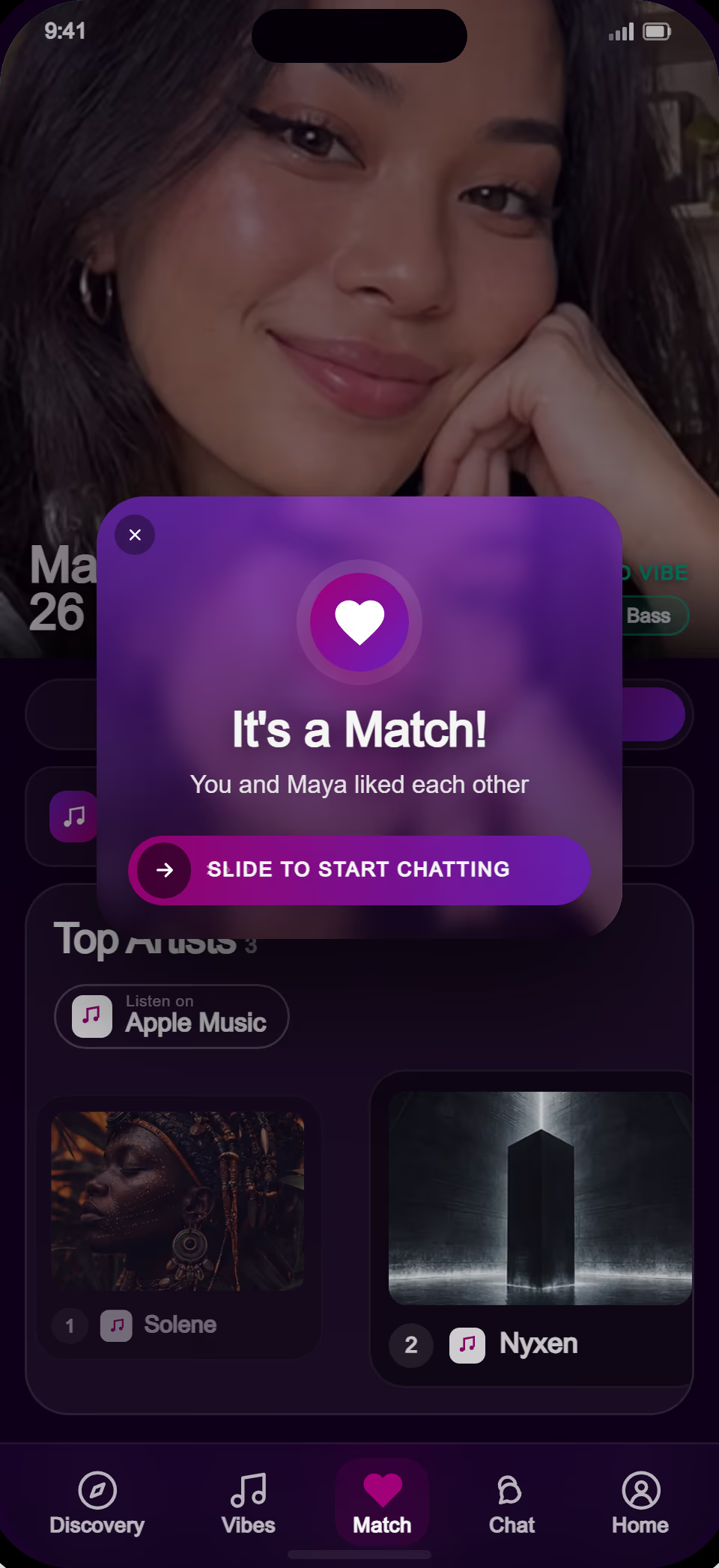
Synceria shipped as a fully functional music-based dating app on both the Apple App Store and Google Play Store, built from concept to launch in approximately one year by a two-person founding team where one person handled all execution. The shipped product includes: Spotify Web API integration for music data, genre-based vibe rooms, a swipe-and-match system with like tiers, real-time chat via Stream Chat, and a three-tier subscription model (GA, VIP, AllAccess).

As a just-launched app with no marketing spend yet, early download and engagement numbers are not the story. The meaningful outcome is the artifact itself: a fully functional, cross-platform music-dating app with genre-based matching, real-time chat, and subscription infrastructure. Researched, designed, built, and shipped by one person in one year, surviving two complete rebrands along the way.

What this proves: frontend design and full-stack development have always been Dylan's strongest areas, but Synceria demonstrates something broader. Having personally executed every role in a product lifecycle (researcher, strategist, UX designer, visual designer, frontend engineer, backend engineer, QA tester, compliance auditor, and launch operator) creates genuine empathy and understanding for every team member's challenges. This isn't theoretical knowledge. It is proven by a live, shipped production product.

The strongest lesson from the year: give yourself enough time to do the job correctly. The original target was a 3-month timeline. That estimate was quickly proven unrealistic, not because the work was harder than expected, but because every stage of the lifecycle takes real time, and rushing through any of them means cutting corners that surface as problems later. The decision to extend to a full year was the right call.

The technical architecture decisions made early in the project proved durable. Choosing Supabase with row-level security meant data isolation was enforced at the database layer rather than relying on application code, which simplified the security audit significantly. The decision to use RevenueCat for subscription management instead of building payment infrastructure from scratch saved weeks of development time and eliminated an entire class of compliance concerns. Stream Chat handled the complexity of real-time messaging, letting the focus stay on the matching algorithm and user experience rather than WebSocket infrastructure.

Building as a solo developer also shaped how decisions were made under pressure. Every tradeoff was immediate and personal: choosing to invest time in the compliance agent system rather than patching individual store rejections, pivoting the Spotify integration model when the legal risk became clear, and committing to physical device testing over simulator-only QA. These were not theoretical product management exercises. They were real decisions with real consequences on a live timeline, made by the same person who would then implement the outcome.

The two rebrands mid-development (Vibin' to SSYNC to Synceria) tested more than patience. Each rename required propagating changes across the codebase, rebuilding app store listings, updating domain strategy, regenerating marketing assets, and re-verifying compliance documentation. What could have been a derailing setback instead became a process lesson: decouple brand identity from deep infrastructure early, because names change but architecture should not have to. That resilience now informs how every future project gets structured from day one.

Looking forward, the next chapter for Synceria is growth: marketing strategy, user acquisition, and iterating on the matching algorithm based on real usage data. The infrastructure is built to scale. PostHog analytics and Sentry crash reporting are already integrated, providing the observability layer needed to make data-driven product decisions as the user base grows. The foundation is not just a launched app. It is a platform ready for its next phase.

2
App store platforms shipped
iOS App Store + Google Play
~1 year
Concept to live launch
Research through deployment
9
Product lifecycle phases owned
Research → Design → Engineering → QA → Launch
2
Full rebrands executed mid-development
Vibin' → SSYNC → Synceria
Capability proof

Can take a product from concept to shipped production release. Can work across research, strategy, design, frontend, backend, and launch operations simultaneously. Can translate complexity into a coherent product that real users can download today.

The lesson on time

Rushing any stage of the product lifecycle (research, planning, design, development, testing) means problems surface later at higher cost. The 3-month estimate became a year. That extension produced a better product.

What to change next time

Treat naming as a foundational decision requiring its own research and legal validation phase before it permeates the codebase. Two full rebrands mid-development built resilience, but they also cost real time. Decouple the brand name from infrastructure earlier.

Documentation & Evidence
  • App Store: https://apps.apple.com/us/app/synceria/id6749789245
  • Google Play: https://play.google.com/store/apps/details?id=com.vibinllc.Synceria
  • Shipped features: Spotify Web API integration, vibe rooms, swipe system, Stream Chat, RevenueCat subscriptions (GA/VIP/AllAccess), PostHog analytics, Sentry crash reporting